

The tantalizing scent wafted through my kitchen, a fiery embrace that promised something spectacular. Enter: Spicy Korean Gochujang Beef Noodles, a vibrant dish that captures the heart of Korean cuisine. With tender beef mingling with chewy noodles in a rich, spicy sauce, this recipe is a gateway to new culinary adventures. What I love most is how quickly it comes together—just 30 minutes and you’ve got a delicious meal ready to impress. Plus, it’s completely customizable, letting you swap in your favorite proteins or even go vegetarian. Whether you’re a seasoned home chef or simply looking to elevate your weeknight dinners, this dish offers plenty of spice to awaken your taste buds. Are you ready to heat things up?
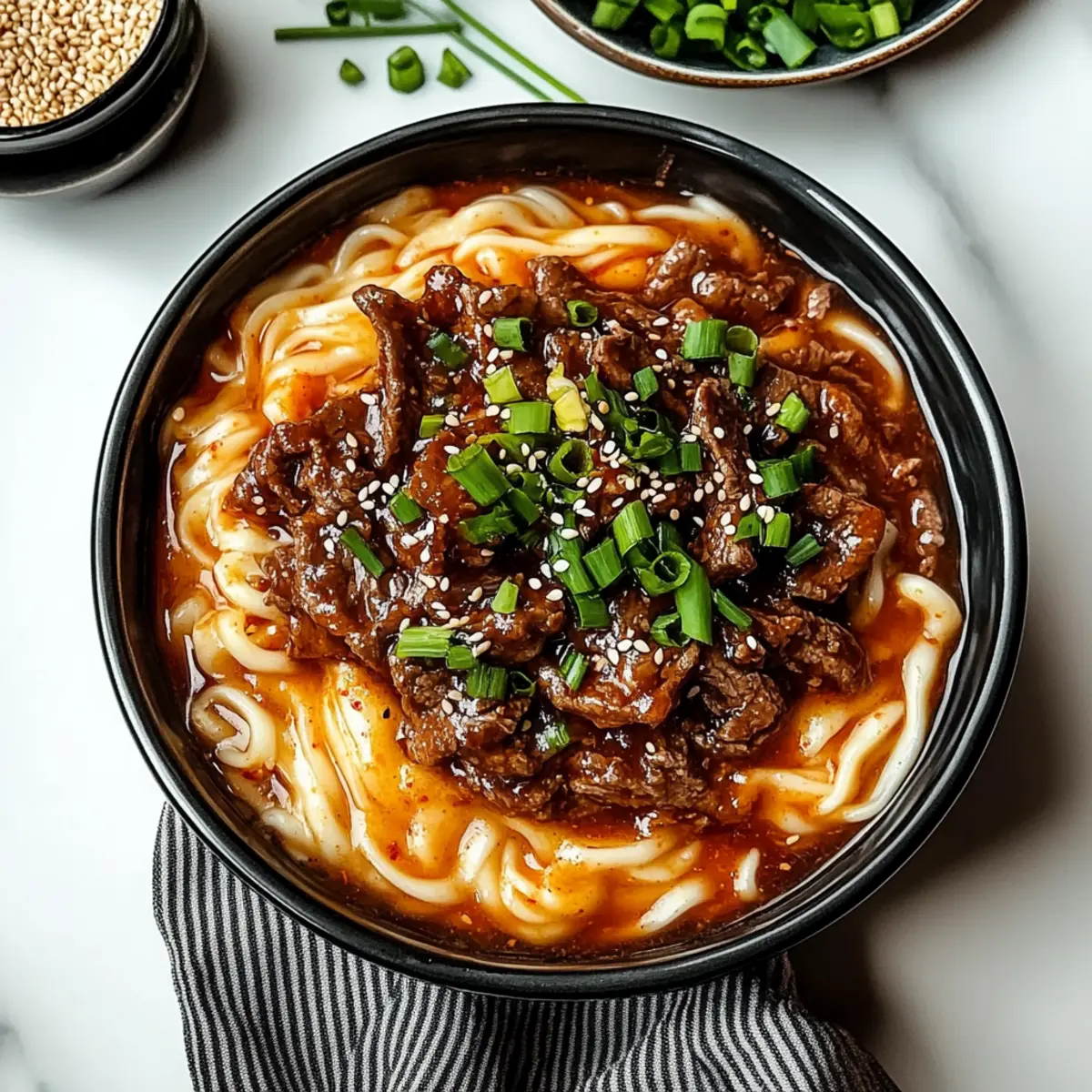
Why Are These Noodles So Special?
Bold flavors come together in this dish, delivering a punch that will leave you craving more. Quick to prepare, you can have dinner on the table in just 30 minutes, perfect for busy weeknights. Customizable options allow you to swap in chicken, shrimp, or even tofu, making it great for everyone at the table. High on satisfaction, this recipe is sure to impress friends and family alike, inviting them to explore the world of Korean cuisine. For more hearty meals, you might also enjoy Ground Beef Stroganoff or a comforting bowl of Beef Noodle Soup. Enjoy the spicy kick!
Spicy Korean Gochujang Beef Noodles Ingredients
For the Beef
• Beef Sirloin – A key protein providing tenderness and robust flavor; substitute with chicken, pork, shrimp, or tofu for variety.
For the Sauce
• Soy Sauce – Provides umami and saltiness; tamari can be used for a gluten-free option.
• Brown Sugar – Balances the heat of gochujang; white sugar can substitute but alters flavor slightly.
• Gochujang – The core flavor component; adjust the amount based on spice preference.
• Sesame Oil – Imparts nutty flavor; light or dark sesame oil can be used.
• Rice Vinegar – Adds acidity and brightness; can substitute with apple cider vinegar if unavailable.
For the Vegetables
• Vegetable Oil – Used for sautéing beef and vegetables; can substitute with canola or sesame oil for additional flavor.
• Garlic (3 cloves, minced) – Adds depth of flavor and aroma; fresh garlic is preferred over powder.
• Onion (1, sliced) – Provides sweetness and texture; yellow or red onion can be used interchangeably.
• Red Bell Pepper (1, sliced) – Adds color and sweetness; any bell pepper color can be substituted.
For the Noodles
• Cooked Noodles (8 ounces) – Base of the dish; use wheat noodles or swap for rice noodles for gluten-free options.
• Sesame Seeds & Green Onions – For garnish; enhances texture and provides visual appeal.
These Spicy Korean Gochujang Beef Noodles are not just a meal, they’re an experience! Enjoy the warmth and deliciousness that comes from this dish that is sure to keep you coming back for more.
Step‑by‑Step Instructions for Spicy Korean Gochujang Beef Noodles
Step 1: Prep Ingredients
Begin by thinly slicing the beef sirloin against the grain to ensure tenderness. Mince three cloves of garlic, slice one onion, and cut a red bell pepper into strips. Cook 8 ounces of noodles according to package instructions until al dente, then drain and set aside. This initial prep will help streamline your cooking process for the Spicy Korean Gochujang Beef Noodles.
Step 2: Heat Oil
In a large skillet or wok, heat 2 tablespoons of vegetable oil over medium-high heat. Once the oil is hot, it will shimmer slightly, indicating it’s ready for cooking. This step ensures the beef will sear beautifully, locking in juicy flavors and creating that signature taste in your Spicy Korean Gochujang Beef Noodles.
Step 3: Cook Beef
Add the sliced beef to the skillet in a single layer, ensuring not to crowd the pan. Cook for about 3–4 minutes, stirring occasionally until the beef is browned but not overcrowded. Remove the beef when it’s golden and transfer it to a plate. This allows the flavors to meld later when you combine everything in the dish.
Step 4: Sauté Vegetables
In the same skillet, toss in the minced garlic and sliced onion. Sauté for about 2 minutes until fragrant and the onions are slightly translucent. Next, add the sliced red bell pepper and continue to cook for another 2–3 minutes, stirring until the peppers begin to soften. This infusion of flavor will enhance the overall taste of your Spicy Korean Gochujang Beef Noodles.
Step 5: Prepare Sauce
In a small bowl, combine 1/4 cup of soy sauce, 2 tablespoons of brown sugar, 2 tablespoons of gochujang, 1 tablespoon of sesame oil, and 1 tablespoon of rice vinegar. Whisk until smooth, ensuring the brown sugar dissolves completely. This sauce will bring a wonderful balance of savory and spicy to your dish, setting the stage for the Spicy Korean Gochujang Beef Noodles’ signature flavor.
Step 6: Combine
Pour the prepared sauce into the skillet with the sautéed vegetables. Stir well to coat everything in the rich sauce. Return the cooked beef to the skillet and toss everything together to evenly distribute the flavors. Allow this to simmer on medium heat for about 2–3 minutes, watching for the sauce to thicken slightly.
Step 7: Add Noodles
Introduce the cooked noodles into the skillet, tossing them gently to ensure they are well coated with the sauce. Stir the mixture for another 2–3 minutes, allowing the noodles to absorb the flavors while they heat through. The result should be a vibrant and glossy infusion of the Spicy Korean Gochujang Beef Noodles.
Step 8: Serve
Once everything is well combined and heated through, remove the skillet from the heat. Serve the Spicy Korean Gochujang Beef Noodles immediately, garnished with a sprinkle of sesame seeds and sliced green onions for added flavor and visual appeal. Enjoy the dish while it’s hot for the best experience!
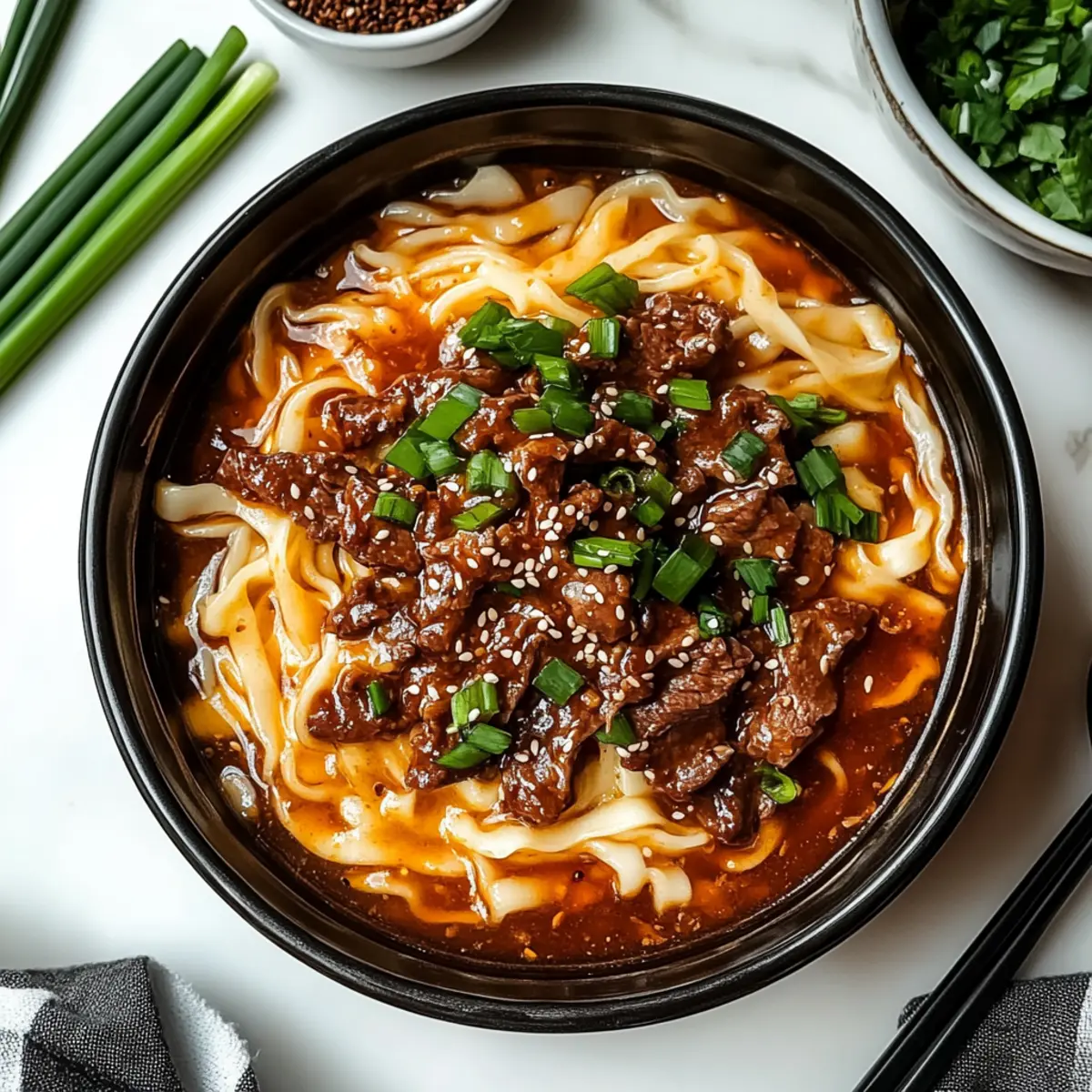
Spicy Korean Gochujang Beef Noodles: Customizable Ideas
Feel free to give this beloved dish your personal touch and create a new flavor experience that dazzles your taste buds!
- Dairy-Free: Substitute regular sauce ingredients with coconut aminos instead of soy sauce for a delightful, sweeter flavor profile.
- Vegetarian: Replace beef with mushrooms or tempeh, offering a hearty texture while keeping that umami flavor intact.
- Extra Spice: For those who love heat, add sliced fresh chilies or a sprinkle of chili flakes to amplify the kick in your noodles.
- Crunchy Toppings: Toss in nuts like crushed peanuts or almonds for added crunch and a nutty flavor contrast with the noodles.
- Fresh Herbs: Garnish with fresh cilantro or basil to elevate the dish with fresh, aromatic notes that brighten every bite.
- Bibimbap Twist: Serve your noodles with a fried egg on top, accompanied by shredded carrots and cucumber for a complete bibimbap experience.
- Seafood Variation: Swap the beef for shrimp, giving the dish a fresh marine twist, and adjust the cooking time accordingly.
- Cold Noodle Salad: Make a refreshing cold noodle salad by mixing leftover noodles with veggies, sesame oil, and a splash of rice vinegar for a light meal.
Don’t forget to explore more enticing recipes, such as Korean Beef Kimbap for a delightful sushi roll experience or try creating a comforting bowl of Beef Shells Delightfully that the whole family will love. Enjoy your culinary journey!
How to Store and Freeze Spicy Korean Gochujang Beef Noodles
Fridge: Store leftovers in an airtight container in the fridge for up to 3-4 days. This keeps the noodles and beef fresh and flavorful.
Freezer: For longer storage, freeze the dish in an airtight container for up to 2 months. Thaw in the refrigerator overnight before reheating.
Reheating: When ready to serve, reheat in a skillet over medium heat, adding a splash of water or broth to loosen the sauce and prevent sticking.
Noodle Care: If possible, store noodles separately from the sauce to maintain their texture. This allows you to savor the Spicy Korean Gochujang Beef Noodles just as deliciously as the first day!
What to Serve with Spicy Korean Gochujang Beef Noodles
A delightful meal calls for perfect pairings that enhance every bite of your flavorful creation.
- Korean Dumplings: The savory filling and crispy exterior of these dumplings provide a satisfying contrast to the spicy noodles, creating a harmonious meal.
- Steamed Bok Choy: Its mild flavor and crisp texture make it a refreshing side, balancing the bold heat of the noodles beautifully.
- Kimchi: A spicy, tangy, and fermented side that adds a layer of zest, complementing the noodles by heightening the overall flavor experience.
- Rice Wine or Soju: These beverages offer a clean, light accompaniment that cuts through the richness of the dish, enhancing its flavors without overpowering them.
- Sesame Spinach Salad: The earthy taste of sesame oil combined with tender spinach makes for a light, nutritious side that contrasts well with the hearty noodles.
- Miso Soup: A warm bowl of miso soup adds comforting depth and umami, creating a soothing backdrop to the spicy, vibrant noodles.
- Pickled Radishes: Sweet and tangy, these crunchy slices provide a refreshing bite that acts as a palate cleanser between flavorful bites of the gochujang noodles.
- Coconut Ice Cream: For dessert, this creamy treat offers a cool, sweet escape from the heat, leaving you with a soothing finish to a fantastic meal.
- Fruit Salad: A refreshing combination of sweet, juicy fruits can brighten your palate and leave a delightful aftertaste alongside the spicy noodles.
Make Ahead Options
These Spicy Korean Gochujang Beef Noodles are a fantastic meal prep option that saves you time during busy weeknights! You can slice the beef and chop the vegetables (onion and bell pepper) up to 24 hours in advance, storing them in airtight containers in the refrigerator. The sauce can also be prepared ahead of time; simply mix the soy sauce, brown sugar, gochujang, sesame oil, and rice vinegar in a bowl, and it will stay fresh in the fridge for up to 3 days. When you’re ready to serve, just heat the oil, sauté the prepped ingredients, add the sauce, and toss in your cooked noodles until everything is heated through. This way, you can enjoy a delicious, home-cooked meal with minimal effort!
Expert Tips for Spicy Korean Gochujang Beef Noodles
-
High Heat Sear: Cooking on high heat allows the beef to sear properly, locking in flavors and ensuring the meat is tender in your Spicy Korean Gochujang Beef Noodles.
-
Noodle Texture: Always toss your noodles in right before serving. This keeps them from getting too soft if they sit in the sauce too long.
-
Taste as You Go: Adjust the gochujang gradually based on your spice preference. Start with less and add more, ensuring the flavors balance perfectly.
-
Colorful Veggies: Don’t hesitate to mix in vibrant vegetables like snap peas or carrots for added nutrition and flavor; they pair beautifully with your Spicy Korean Gochujang Beef Noodles.
-
Storage Strategy: Store the noodles separately from the sauce if you have leftovers. This keeps the noodles from absorbing too much moisture and losing texture upon reheating.
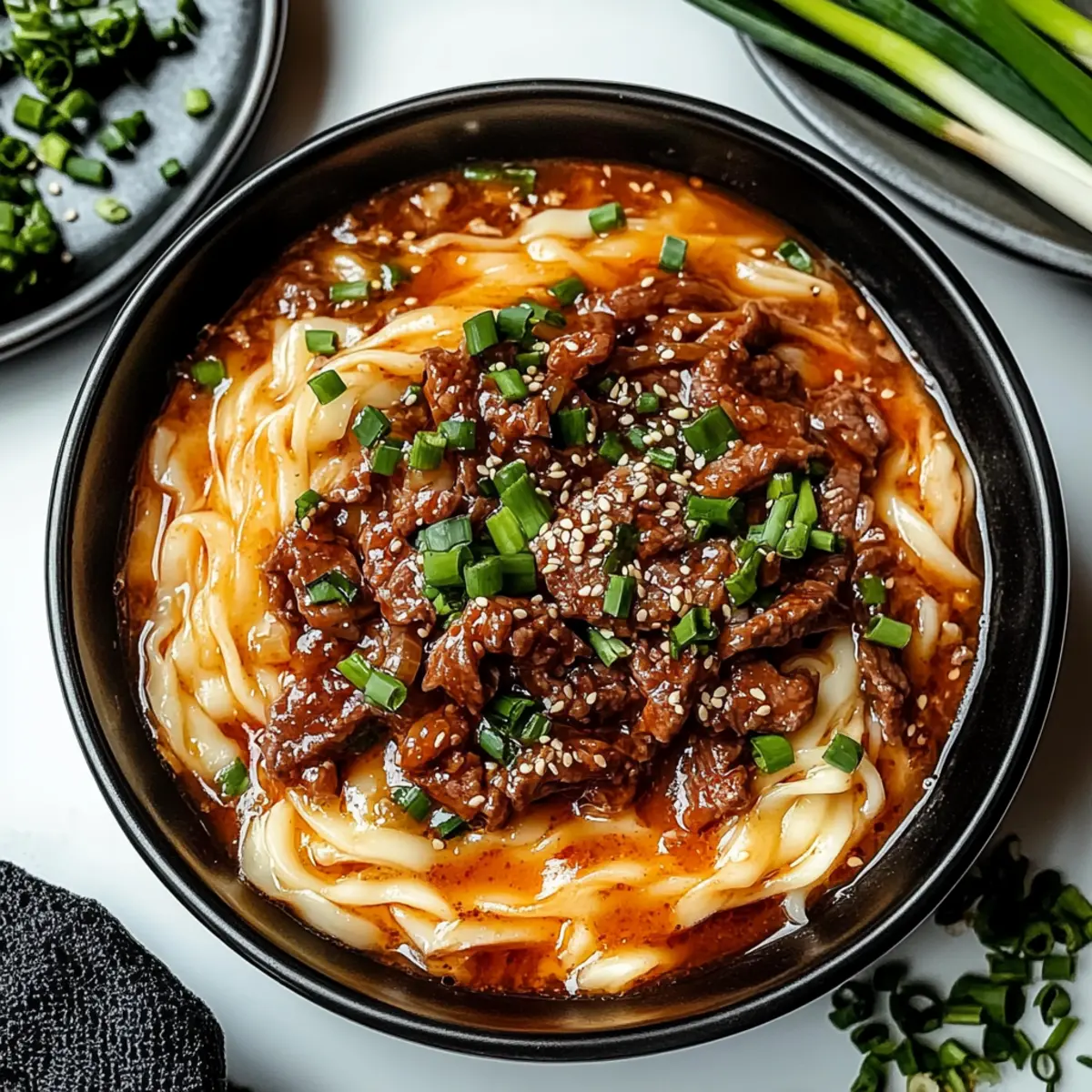
Spicy Korean Gochujang Beef Noodles Recipe FAQs
How do I choose the right beef for this recipe?
For the best flavor and tenderness, opt for beef sirloin, which sears beautifully and remains juicy. If you’re looking to switch things up, chicken, pork, shrimp, or tofu are fantastic alternatives. Just make sure to adjust the cooking times accordingly, as different proteins will require varying amounts of time to cook through.
What is the best way to store leftovers?
Leftovers should be stored in an airtight container in the fridge for up to 3-4 days. This helps maintain their flavor and freshness. Before serving, ensure you reheat the dish thoroughly over medium heat, adding a splash of water if necessary to prevent sticking and keep the noodles moist.
Can I freeze Spicy Korean Gochujang Beef Noodles?
Absolutely! To freeze, let the dish cool completely, then transfer it to an airtight container. It can be stored in the freezer for up to 2 months. When you’re ready to enjoy it again, simply thaw it in the fridge overnight and reheat in a skillet over medium heat, stirring occasionally until heated through.
What should I do if my noodles are too soggy after storage?
If your noodles turn out soggy, try reheating them gently in a skillet with a little vegetable oil, allowing them to cook just enough to regain some texture. You can also add a sprinkle of fresh vegetables or herbs to brighten the dish and enhance its appeal.
Are there any dietary considerations I should keep in mind?
Yes! This dish contains soy sauce, which may not be suitable for those with gluten allergies. Opt for tamari as a gluten-free alternative. Additionally, the gochujang’s spiciness can be adjusted according to your tolerance, making this recipe versatile for different dietary preferences.
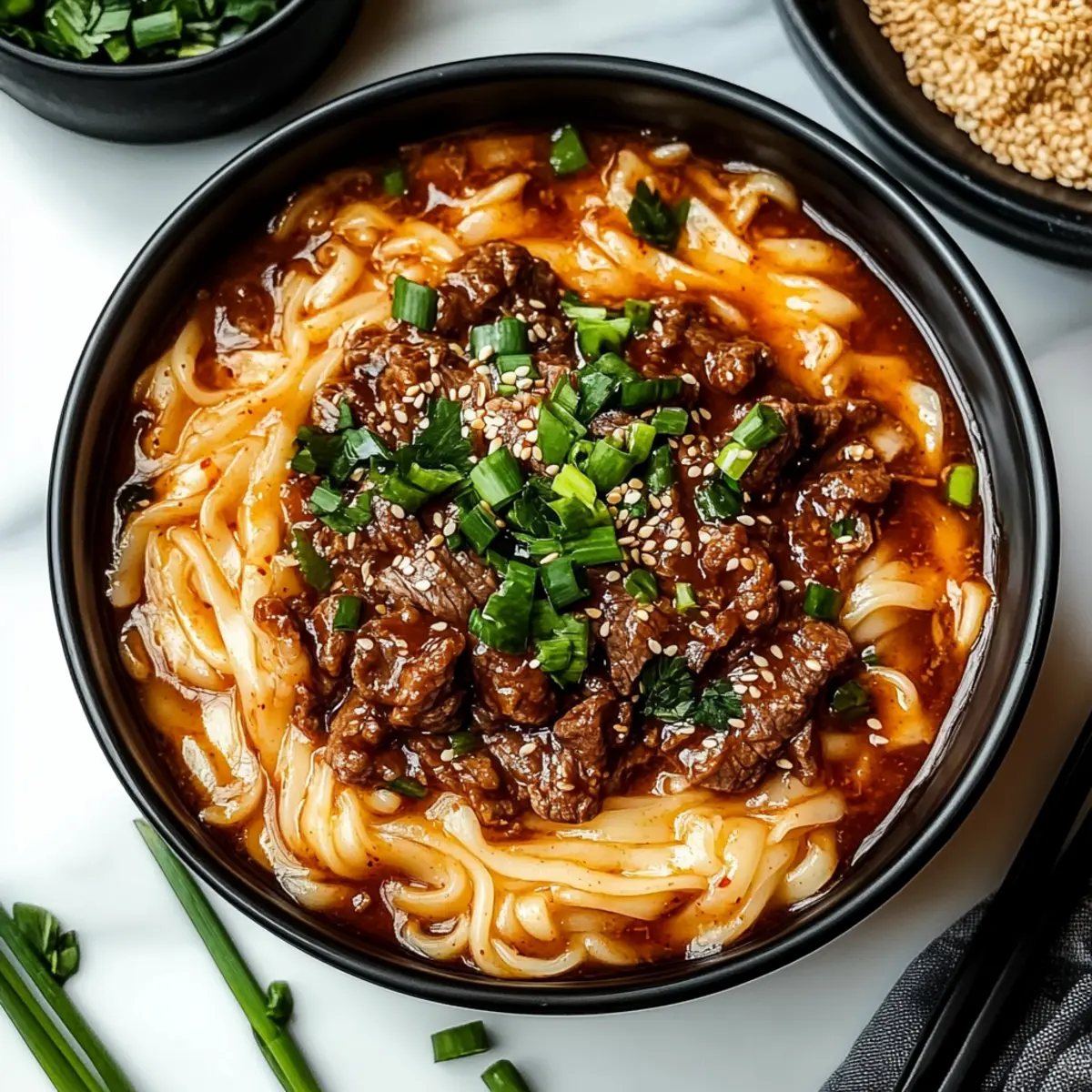
Spicy Korean Gochujang Beef Noodles: A Flavorful Fiesta
Ingredients
Equipment
Method
- Begin by thinly slicing the beef sirloin against the grain.
- In a large skillet or wok, heat vegetable oil over medium-high heat.
- Add the sliced beef to the skillet in a single layer; cook for 3-4 minutes.
- In the same skillet, sauté minced garlic and sliced onion for about 2 minutes.
- Add the sliced red bell pepper and continue to cook for another 2-3 minutes.
- In a small bowl, mix soy sauce, brown sugar, gochujang, sesame oil, and rice vinegar.
- Pour the sauce into the skillet, return the cooked beef and mix everything together.
- Introduce the cooked noodles, tossing gently to coat well.
- Serve the dish immediately, garnished with sesame seeds and sliced green onions.