

In a whirlwind of midweek chaos, the thought of dinner can feel a bit daunting. Enter my Cozy Thai Noodle Soup—an absolute lifesaver for those hectic evenings. This delightful dish is a comforting embrace of rich coconut milk and vibrant red curry, seamlessly blended with tender noodles and fresh vegetables. Not only does it promise to warm your soul, but it’s also incredibly easy to whip up, making it a perfect, family-friendly meal. You’ll find yourself savoring every spoonful as the aromatic flavors dance on your palate, turning even the busiest nights into a culinary delight. Ready to transform your dinner routine? Let’s dive into this satisfying, homemade bowl of bliss together!
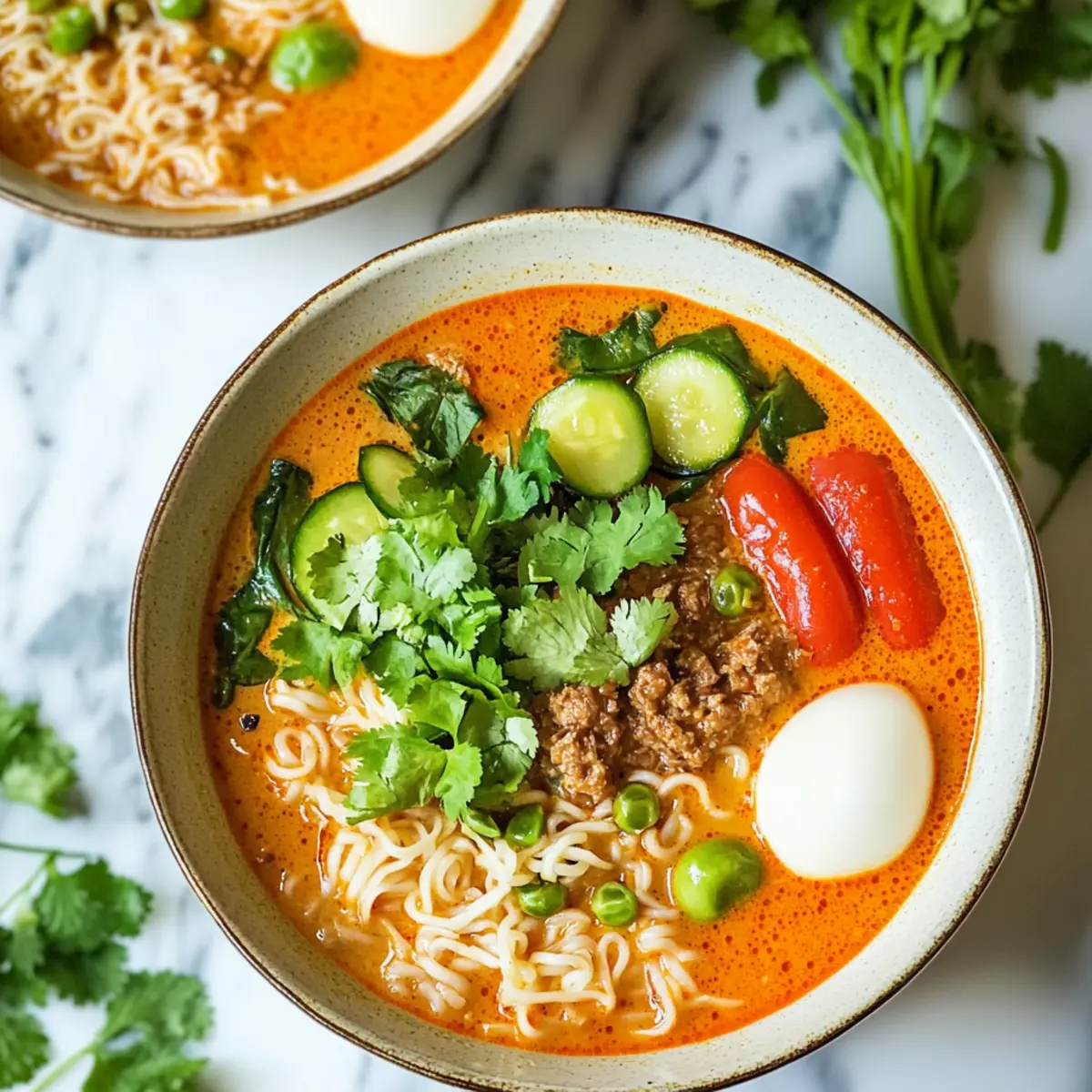
Why Choose This Thai Coconut Curry Ramen?
Comfort and Convenience: This cozy Thai noodle soup is a breeze to make, requiring minimal prep and cooking time—perfect for busy weeknights.
Vibrant Flavors: Experience the exciting blend of red curry and creamy coconut milk that transports your taste buds straight to Thailand, no passport necessary!
Family-Friendly Delight: Kids and adults alike will celebrate this dish, making it a surefire hit at dinner time.
Nutritionally Rich: Packed with fresh vegetables and healthy fats, it’s a dish you can feel good about serving, similar to our popular Thai Shrimp Coconut soup!
Customizable: With options for protein and veggies, you can easily adjust ingredients based on your family’s preferences. Get creative and make this cozy meal your own!
Thai Coconut Curry Ramen Ingredients
For the Base
- Red Curry Paste – Provides the key flavor foundation for the soup; consider using green curry paste for a milder flavor.
- Coconut Milk – Adds creaminess and richness, balancing the spice of the curry; unsweetened almond milk can be a lighter option.
- Vegetable Broth – Serves as the soup base, infusing it with depth; chicken broth can be substituted for a non-vegetarian version.
For the Noodles
- Noodles (e.g., rice noodles or egg noodles) – Provide substance and texture; gluten-free noodles can replace standard if needed.
For the Vegetables
- Mixed Vegetables (e.g., bell peppers, snap peas, carrots) – Contributes freshness and nutrition; any seasonal vegetables can be swapped for variety.
For Protein Options
- Protein (e.g., tofu, chicken, shrimp) – Optional, adds heartiness to the dish; choose plant-based protein for a vegetarian option.
For Seasoning
- Lime Juice – Brightens flavors and adds acidity; lemon juice can be a substitute in a pinch.
- Fresh Herbs (e.g., cilantro, basil) – Enhances flavor and presentation; any fresh green herbs can be used based on preference.
Dive into this delicious Thai Coconut Curry Ramen, a meal that transforms your dinner routine with its heartwarming tastes!
Step‑by‑Step Instructions for Thai Coconut Curry Ramen
Step 1: Sauté the Base
In a large pot, heat a tablespoon of oil over medium heat. Add 2 tablespoons of red curry paste and sauté for about 2 minutes or until fragrant, stirring frequently. This step helps to release the essential oils of the curry paste, creating a flavorful base for your Thai Coconut Curry Ramen.
Step 2: Add Liquid Ingredients
Pour in one can of coconut milk and 4 cups of vegetable broth, stirring gently to combine. Increase the heat to medium-high and bring the mixture to a gentle simmer, observing small bubbles forming on the surface. This will allow the flavors to meld together beautifully, creating a rich and creamy soup base.
Step 3: Incorporate Noodles and Vegetables
Once the broth is simmering, add 8 ounces of your chosen noodles and 2 cups of mixed vegetables to the pot. Cook for 5 to 7 minutes, or until the noodles are tender and the vegetables are vibrant and slightly tender. Make sure to stir occasionally to prevent the noodles from sticking together.
Step 4: Add Protein
If using protein like tofu, chicken, or shrimp, add it to the pot during the last 2 minutes of cooking. Stir gently to ensure even cooking, and observe as the protein heats through to a tender, juicy finish. This last-step inclusion enhances your Thai Coconut Curry Ramen with added heartiness.
Step 5: Final Seasoning and Serve
Remove the pot from heat and stir in the juice of one lime, adding a bright note to your soup. Taste and adjust seasoning if desired. Serve warm in bowls, garnished with fresh herbs like cilantro or basil, creating an inviting presentation that promises warmth and satisfaction in every delicious spoonful.
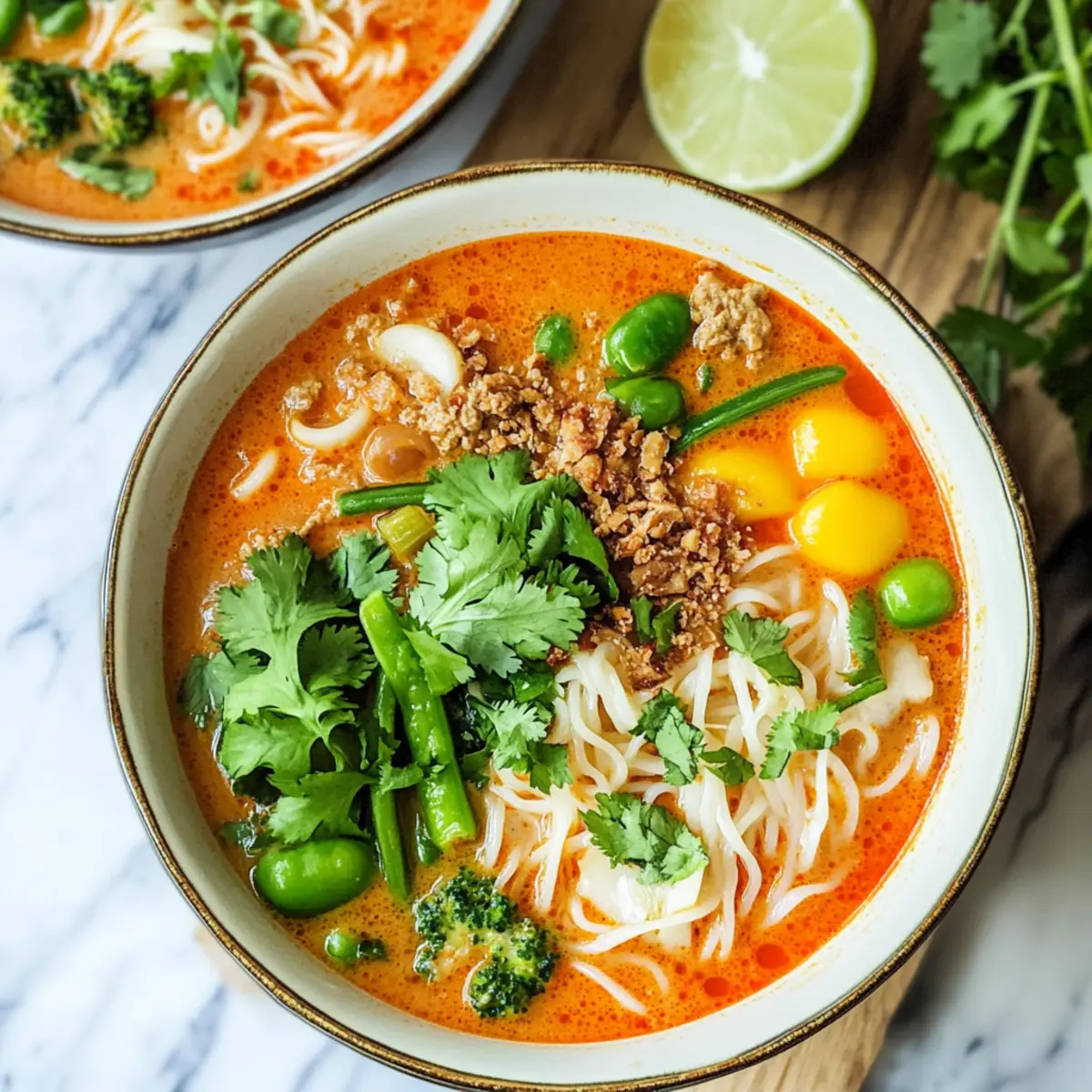
What to Serve with Cozy Thai Noodle Soup?
Imagine a cozy dinner table set with vibrant, colorful dishes that perfectly complement your aromatic Thai noodle soup, making for a truly enticing meal experience.
-
Steamed Jasmine Rice: A fragrant addition, it absorbs the luscious broth, enhancing each spoonful of your soup.
-
Fresh Spring Rolls: These light and crispy rolls filled with veggies and herbs provide a refreshing crunch, contrasting beautifully with the creamy texture of the soup.
-
Crispy Tofu Bites: Add these for extra protein and texture; their subtle crunch pairs harmoniously with the silky noodles and soup.
-
Garlicky Green Beans: Sautéed with a hint of sesame oil, they offer a delightful earthiness that elevates the entire meal.
-
Mango Salad: This sweet and tangy salad adds a burst of freshness, balancing the rich flavors of the soup and brightening the palate.
-
Chili Lime Edamame: Lightly salted and tossed with lime juice, these provide a fun, zesty snack that complements the soup beautifully.
-
Coconut Flan: Finish your meal on a sweet note with this creamy dessert that echoes the coconut flavors in the soup while providing a delightful contrast.
-
Crisp White Wine: A chilled glass of Sauvignon Blanc or Pinot Grigio can enhance the meal, cutting through the richness with its refreshing notes.
How to Store and Freeze Thai Coconut Curry Ramen
Fridge: Keep leftovers in an airtight container for up to 3 days. Reheat gently on the stove, adding a splash of broth if needed to restore creaminess.
Freezer: You can freeze the soup for up to 2 months. Store in freezer-safe containers, but avoid freezing noodles separately as they can become mushy when thawed.
Reheating: When ready to enjoy, thaw overnight in the fridge, then reheat on the stove over low heat, stirring occasionally until heated through.
Broth Absorption: Be aware that noodles may absorb broth during storage. Add a little broth or water when reheating to achieve your desired consistency in this comforting Thai coconut curry ramen.
Thai Coconut Curry Ramen Variations
Feel free to get creative with this delightful recipe and make it your own!
- Dairy-Free: Use coconut milk, which provides creaminess without dairy; it’s perfect for lactose intolerance!
- Gluten-Free: Opt for rice noodles instead of egg noodles or a gluten-free pasta to accommodate dietary needs.
- Extra Protein: Boost your ramen by adding chickpeas for a vegetarian twist; they soak up the flavors beautifully.
- Spicy Kick: Introducing sliced chili peppers or a drizzle of chili oil can elevate the heat to your liking.
- Seasonal Veggies: Swap in whatever fresh veggies are on hand—zucchini or kale can add a wonderful texture and flavor.
- Umami Boost: A splash of fish sauce or soy sauce can deepen the flavor profile, enhancing the overall taste.
- Herb Variations: Experiment with fresh herbs like mint or parsley for a different aromatic twist and presentation.
- Nutty Flavor: Toasted sesame oil adds a rich, nutty aroma that can complement the soup beautifully.
Feeling adventurous? This Thai Shrimp Coconut soup is another recipe to try that infuses similar flavors with a fun twist! Enjoy making this meal fit your unique taste buds!
Expert Tips for Thai Coconut Curry Ramen
-
Balance Flavors: Adjust the amount of red curry paste according to your spice tolerance. Taste as you go to find your perfect balance in this Thai Coconut Curry Ramen.
-
Mix & Match Veggies: Feel free to swap in seasonal vegetables for a fresh twist. Avoid overcooking them to maintain texture and color.
-
Noodle Choice: If using gluten-free noodles, check the package instructions—some require shorter cooking times to avoid mushiness.
-
Protein Perfection: Add protein during the final cooking minutes to ensure it remains tender and juicy. Avoid overcooking, especially with shrimp.
-
Storage Secrets: Store leftovers in an airtight container for up to three days. Remember, the noodles may absorb broth; you can add a splash of broth when reheating to loosen the soup.
Make Ahead Options
These Thai Coconut Curry Ramen are a lifesaver for busy weeknights and are perfect for meal prep! You can prepare the soup base (red curry, coconut milk, and broth) up to 3 days in advance and store it in an airtight container in the refrigerator. The mixed vegetables can also be chopped and kept in a separate container, ready for cooking. When you’re ready to enjoy this comforting dish, simply reheat the soup base on the stove, add the noodles and fresh veggies, then incorporate your choice of protein during the last few minutes to heat through. This way, you’ll savor all the deliciousness without sacrificing quality or flavor!
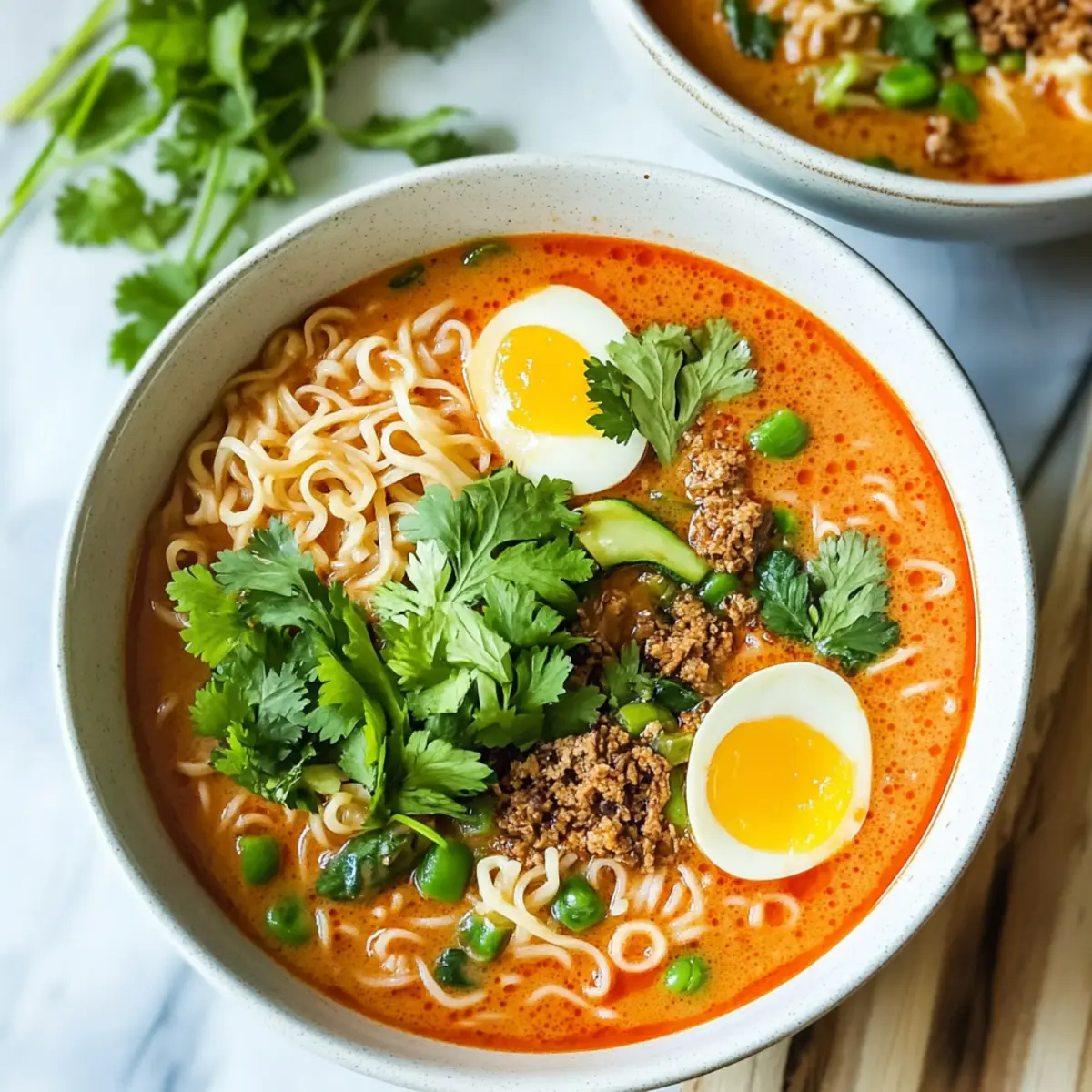
Thai Coconut Curry Ramen Recipe FAQs
How do I choose the right red curry paste?
Absolutely! When selecting red curry paste, look for one that is vibrant in color and comes from a reputable brand. Check the ingredients to ensure it doesn’t contain added preservatives or artificial flavors. You may want to consider your spice tolerance; if you prefer milder flavors, opting for green curry paste could be a delightful alternative!
How should I store leftover Thai coconut curry ramen?
When storing leftovers, ensure you place the soup in an airtight container. It can be kept in the refrigerator for up to 3 days. For best results, reheat gently on the stove over low heat, adding a splash of broth if the consistency has thickened.
Can I freeze Thai coconut curry ramen?
Yes! You can freeze the soup for up to 2 months. To do this, transfer it to freezer-safe containers, making sure not to freeze the noodles separately as they can become mushy upon thawing. Thaw overnight in the refrigerator before reheating on the stove over low heat.
What should I do if the soup is too salty?
Very! If you find your soup is overly salty, try adding a few slices of raw potato to the pot while it’s reheating. The potato will absorb some of the saltiness. Allow it to simmer for about 10 minutes, then remove the potato before serving. Additionally, adding more coconut milk and vegetables can help balance the flavor.
Is this dish suitable for special diets?
Absolutely! This Thai coconut curry ramen can be easily customized for various dietary needs. Use gluten-free noodles for those with gluten sensitivities and plant-based protein like tofu or chickpeas for a vegetarian option. Also, feel free to skip any allergens by replacing ingredients as needed, ensuring the dish is both safe and enjoyable for everyone at the table.
How do I prevent the noodles from becoming mushy?
The more the merrier! To keep your noodles from turning mushy, avoid overcooking them in the initial preparation. Be sure to add them towards the end of the cooking process (as noted in the instructions) and follow the package directions, especially if using gluten-free noodles, which may require less cooking time. Additionally, storing the soup separately from the noodles can help maintain their texture when reheating leftovers.
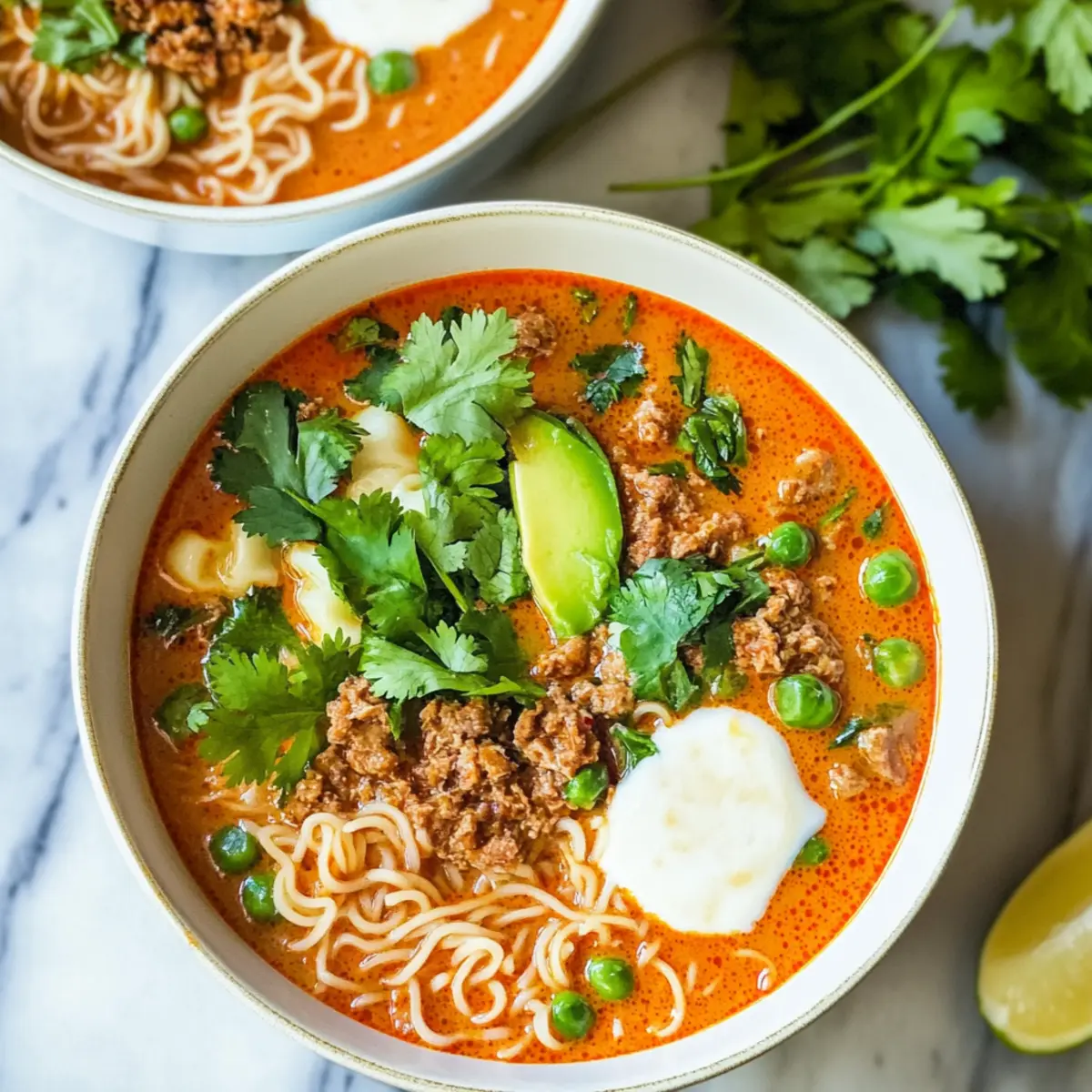
Irresistible Thai Coconut Curry Ramen for Cozy Nights
Ingredients
Equipment
Method
- In a large pot, heat a tablespoon of oil over medium heat. Add 2 tablespoons of red curry paste and sauté for about 2 minutes or until fragrant.
- Pour in one can of coconut milk and 4 cups of vegetable broth, stirring gently to combine. Increase the heat to medium-high and bring to a gentle simmer.
- Once simmering, add 8 ounces of noodles and 2 cups of mixed vegetables. Cook for 5 to 7 minutes, stirring occasionally.
- If using protein, add it to the pot during the last 2 minutes of cooking.
- Remove the pot from heat and stir in the juice of one lime. Serve warm, garnished with fresh herbs.